The key AI moments that defined 2025
Depending on who you ask, 2024 was the year of chatbots, then 2025 was the year of agents.
From Trump frenemyship, the DOGE debacle, unmet self-driving car promises, chainsaws and “Mechahitler” to a $1 trillion pay deal, 2025 was the billionaire’s most chaotic and lucrative year.
OpenAI wanted GPT-5 to be less warm and agreeable than its predecessor. Some neurodivergent people struggled with the change, showing the tricky balance AI companies must strike when releasing new models.
We’re obsessed with perception—how AI makes us look and what it signals to the market, writes work futurist Dominic Price. What we need is perspective and a sense of how AI actually changes value.
The new law ‘delaying’ social media accounts for minors under 16 is now in effect. Ten tech companies are impacted by the first ‘blanket ban’ in the world. Other countries may now follow suit.
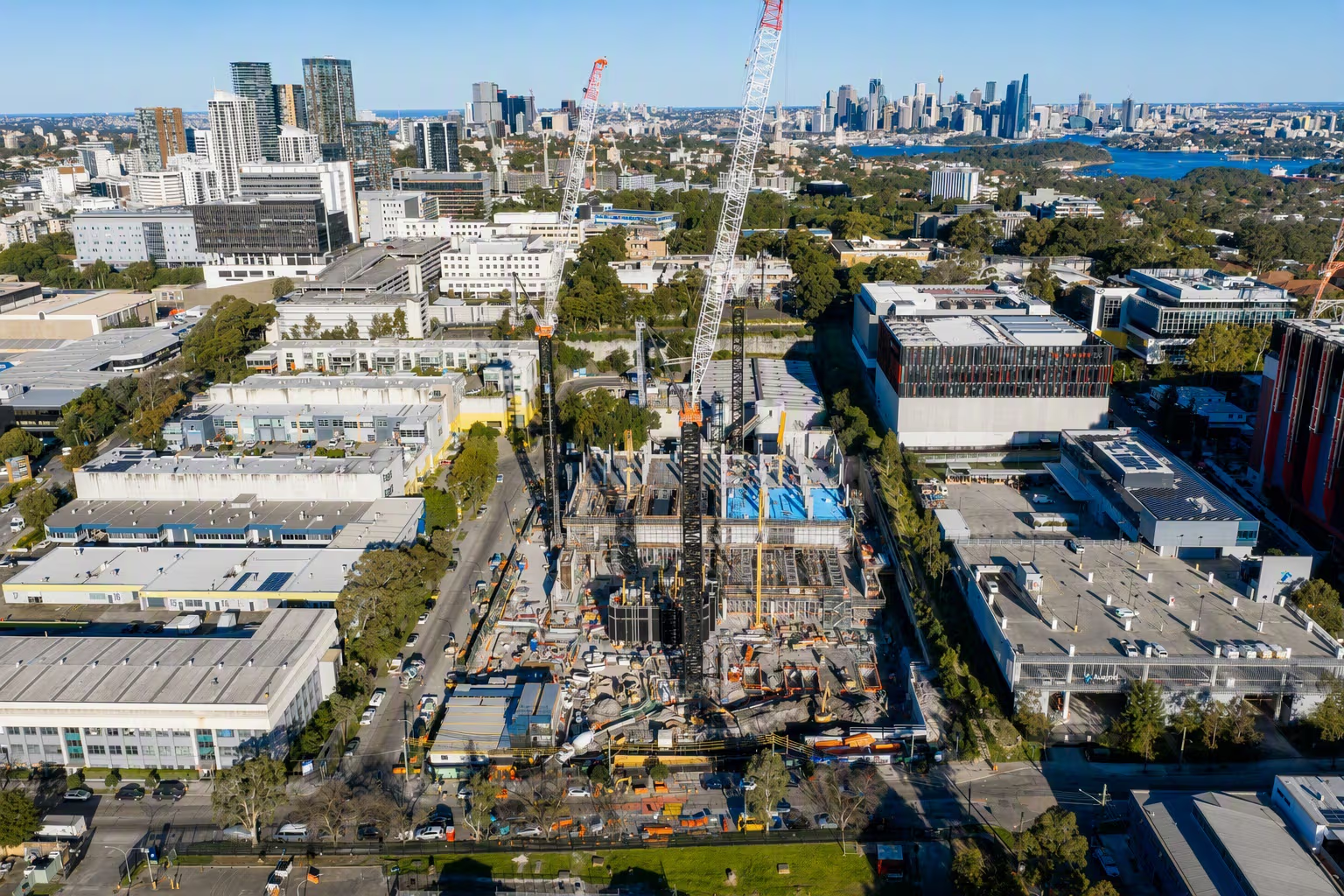
The $4.6 billion data center to be built on NextDC’s facility in Sydney will serve OpenAI clients such as Commonwealth Bank of Australia and Wesfarmers.
The startup nabbed a $29.3 billion valuation in a $2.3 billion funding round Thursday, minting its four 20-something founders as billionaires.
Australia is running out of the human data that powers AI, and companies are already building systems to monetise the behavioural signals that remain. The risk is simple: institutions capture the value while consumers and the country miss out, writes Cam Partridge.
A security researcher discovered a major flaw in the coding product, the latest example of companies rushing out AI tools vulnerable to hacking.
A 2025 MIT study found that using generative AI boosts productivity but reduces memory and cognitive engagement, with brain connectivity dropping by up to 55%. Yet, Nature Neuroscience research shows mindful use can enhance cognitive flexibility.